Skip Main MenuSkip

Contact us:

info@ednin.org

Phone: (574) 233-6489

Fax: (574) 287-7914 

Skip Flooding in the Calumet

Flooding in the Calumet

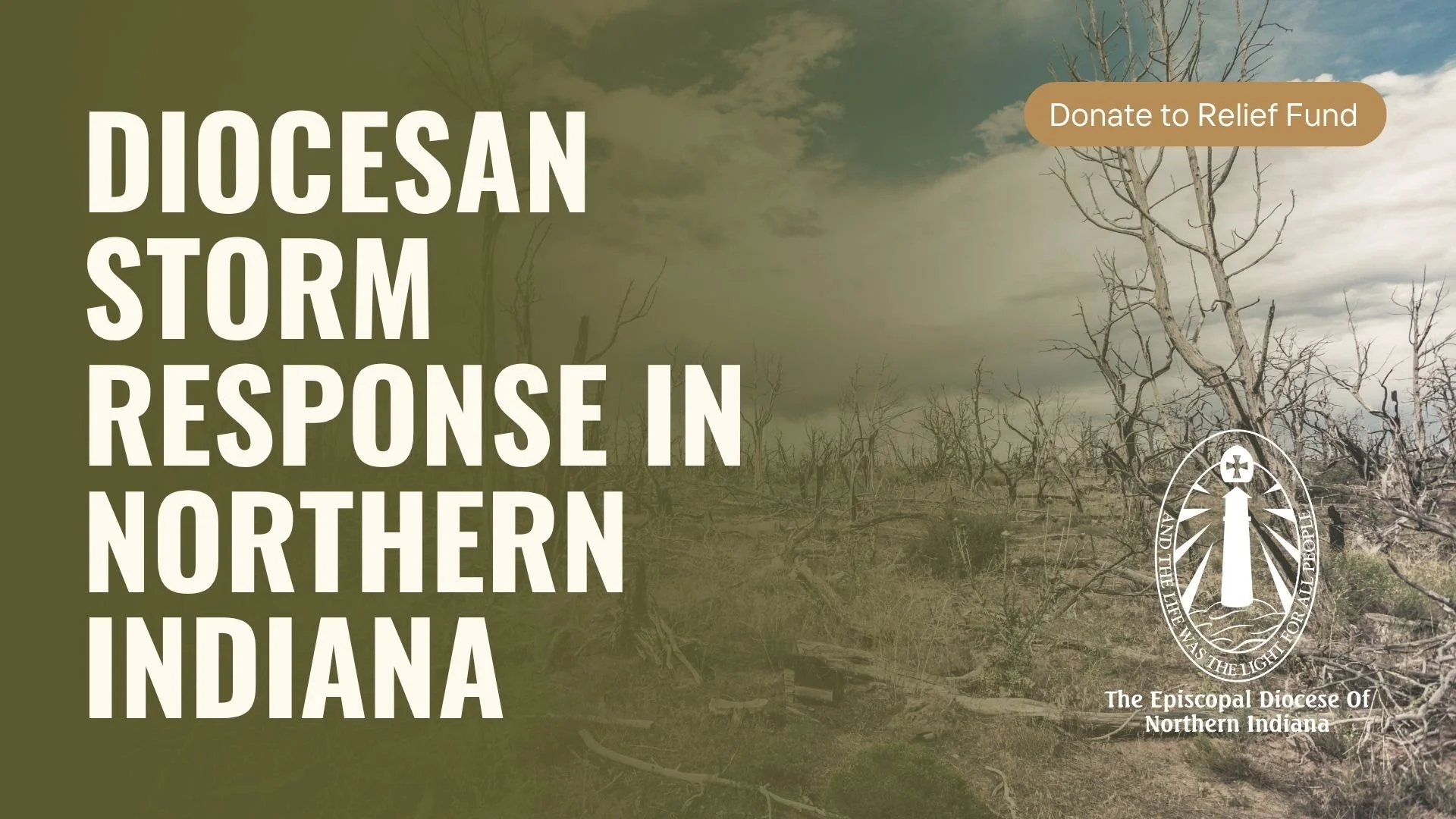
St. Paul's, Munster responded swiftly to the recent flooding in the Calumet region of Indiana. By obtaining grants and donations, they became a conduit for over $10,000.00 of gift cards to aid in the recovery effort!

The Flood

The Damage

The Clean-up

The volunteers

Skip Parishes in the News

Parishes in the News

Read all about Holy Family's work with a community health clinic in an article recently published in the Angola Herald-Republican.

Read all about Trinity's back-to-school supply give-away in an article recently published in the Logansport Pharos-Tribune.

Skip Administration

Administration

Site news

Picture of Edward Little
Bishop Ed Little's Address to the 110th Diocesan Convention
by Edward Little - Saturday, 25 October 2008, 08:39 PM
 

Address to the 110th Convention
of the Diocese of
Northern Indiana
Trinity Episcopal Church
Fort Wayne
, Indiana
October 25, 2008

The Rt. Rev. Edward S. Little II
VII Bishop of
Northern Indiana

Grace to you and peace from God our Father and from the Lord Jesus Christ.

For eleven years, from the mid-70s through the mid-80s, I served as rector of St. Joseph’s Church in Buena Park, California. My predecessor, a priest named Charles Searcy, once said the following: “The Church is what you have left after the building burns down.” I remember using that line when I presided over the consecration of the new church building at All Saints, Syracuse, and people gasped. After the blood, toil, tears, and sweat of building a new and beautiful structure, it seemed like a shocking thing to say – except that it’s true. The Church is what you have left after the building burns down.

The bishop’s annual address at Diocesan Convention is a kind of extended rumination on the Church: what Jesus intends us to be, and whether we’re living up to Christ’s call. So I want to begin by thinking in biblical terms about the Church, and then we will turn our attention to some practical questions about the Diocese of Northern Indiana and our place both in our own region and in the wider scheme of things.

In the New Testament, the phrase “the body of Christ,” when it refers to the Church, has two basic meanings. It refers to the Church around the world, and to the local Church in our own communities. Each of these meanings is found in the writings of the Apostle Paul.

[God the Father] has put all things under [Christ’s] feet, and made him, as the ruler of everything, the head of the Church, which is his body, the fullness of him who fills the whole creation. . . . You are part of a building that has the apostles and prophets for its foundations, and Christ Jesus himself for its main cornerstone. As every structure is aligned on him, all grow into one holy temple in the Lord. . . . There is one Body, one Spirit, just as you were all called into one and the same hope when you were called. There is one Lord, one faith, one baptism, and one God who is Father of all, over all, through all and within all (Ephesians 1:22-23; 2:20-21; 4:4-6).

St. Paul is telling us that the Church is a supernatural community. Jesus lives in the Church. We're connected spiritually to him and to one another, and the Church stretches around the world - on every continent, in every culture, speaking every language - and back through time to the apostles and to Jesus himself. We must strive for unity, Paul says, because the very nature of the Church is to be one: a quality or "note" that we affirm every time we recite the Nicene Creed. All of this is to say that we need a vision of the Church which is at once supernatural and international; a vision that recognizes that the Church isn't simply one more human organization, a kind of liturgical supper club, but a community where the Risen Christ lives; a vision that embraces the whole world and yearns, as our Catechism puts it, "to restore all people to unity with God and each other in Christ" (Prayer Book, p. 855).

But then, in his First Letter to the Corinthians, St. Paul uses the phrase “the body of Christ” with a different nuance:

Just as a human body, though it is made up of many parts, is a single unit because all these parts, though many, make one body, so it is with Christ. In the one Spirit we were all baptized, Jews as well as Greeks, slaves as well as citizens, and one Spirit was given to us all to drink. Nor is the body to be identified with any one of its many parts. If the foot were to say, “I am not a hand, and so I do not belong to the body,” would that mean that it stopped being part of the body? If the ear were to say, “I am not an eye, and so I do not belong to the body,” would that mean that it was not a part of the body?If your whole body was just one eye, how would you hear anything? If it was just one ear, how would you smell anything? Instead of that, God put all the separate parts into the body on purpose. If all the parts were the same, how could it be a body? As it is, the parts are many but the body is one. The eye cannot say to the hand, “I do not need you,” nor can the head say to the feet, "I do not not need you." . . . Now you together are Christ’s body; but each of you is a different part of it (1 Corinthians 12:12-21, 27).

Here Paul is talking not so much about the universal Church, the Church around the world, as he is the local Church: He’s talking about the Diocese of Northern Indiana (since the diocese is the basic expression of the local Church, the primary unit on the local level) and about the missionary outposts of the diocese: Trinity, Fort Wayne, and Holy Family, Angola, and St. Peter’s, Rensselaer, and Gethsemane, Marion, and St. Timothy’s, Griffith, and St. David’s, Elkhart, and St. Andrew’s, Kokomo. Paul says that every local expression of the Church contains within its own life all of the gifts and talents and resources that it needs for its mission and ministry. There’s no such thing as an under-resourced community of Christians. Whether a diocese is huge like Massachusetts or Virginia, or tiny like Northern Indiana, and whether your parish is large or small, wealthy or financially strapped, rural, urban, suburban, or exurban, Jesus has given to each community of Christians everything that we require to accomplish Christ’s purpose. We are all essential, every one of us, in the Kingdom of God. Over the course of this address, you’re going to hear some stunning examples of this biblical principle in action. Jesus is already at work in the Diocese of Northern Indiana – transforming lives, offering hope in the midst of hopelessness, empowering Christians to do what they could never do unaided.

Keep all of this in mind as we ponder the Church. We are the body of Christ: the worldwide family, of which Jesus is the head, bonded to him and to one another in baptism, fed by the Eucharist, linked to the Church throughout the ages. We are the body of Christ: communities gathered in the name of Jesus, filled with his Spirit, and equipped to touch our neighborhoods and region and world. The Church is what you have left after the building burns down.

But first, a couple of reminders. For almost nine years, we’ve been lifting up a series of four Core Values, measuring sticks that help us to look at ourselves and our ministry and the quality of our life together. They are

  • A passion for the Gospel of Jesus Christ
  • A heart for the lost
  • A willingness to do whatever it takes
  • A commitment to one another

And then, two years ago, the diocesan Whatever It Takes Task Force proposed ACT, Actions for Congregational Transformation, as a way of taking our core values and making them real. They include

  • Conversion – continually turning away from sin and towards Jesus Christ
  • Evangelism – presenting Jesus Christ in the power of the Holy Spirit
  • Local Mission – responding to the needs of our neighbors
  • World Mission – connecting to the wider world

These Actions are inter-connected. We can’t reach out to our neighborhood and our world unless Jesus is changing us from the inside out. We can’t feed the hungry and challenge the injustices around us unless we’re also attending to the eternal destinies of men and women and offering the hope of the Gospel. We can’t dispatch missionaries unless we ourselves are open to transformation. You’ll notice at lunch today in the Great Hall that we’ve had two banners made, one with the Core Values and the other with Actions for Congregational Transformation, and both decorated with the lighthouse logo. It’s a way of placing these concepts in front of us as we go about the business of Diocesan Convention.

The wider picture

We will begin with the Anglican Communion. As you know, the once-per-decade Lambeth Conference met this past summer in Canterbury, with about 630 bishops present. Sadly, some 250 bishops – primarily but not exclusively from the Global South – chose not to attend, in large part because bishops from the Episcopal Church were present. The gathering was diminished because their voices were absent. At the same time, I have to say that I came away from Lambeth cautiously encouraged by what I experienced there. Everyone took seriously the divisions that the Communion is experiencing today, and Archbishop Rowan Williams himself laid out for us the path that we need to take if we’re to restore and deepen our relationships. In his closing presidential address, Archbishop Rowan said that we need to do two things if we are to heal the divisions in our Communion. First, we must honor the three moratoria called for in the Windsor Report: a moratorium on the election and ordination as bishops of priests living in same-sex partnerships, a moratorium on bishops authoring liturgies for the blessing of same-sex unions, and a moratorium on bishops and primates crossing into dioceses and provinces without permission of local leaders. Second, we must be willing to embrace the Anglican Covenant. For several years, at the instigation of the Windsor Report, a Covenant Design Group has been working on drafts of a Covenant that will help the Provinces of the Anglican Communion to find ways of making decisions together. We’ve been functioning as a worldwide Communion in a kind of informal, ad hoc way that no longer works in this era of instant, global communication; and so the Covenant will provide protocols and procedures to address the need for doctrinal and practical coherence. The next, and probably final, draft of the Covenant should be ready in time for the Anglican Consultative Council to endorse it in May and then to commend it to the Provinces for ratification. By the time we gather for Diocesan Convention next year, then, we’ll have the Covenant in front of us; and my hope is that this Convention will formally embrace the Covenant and indicate our commitment not only to the Episcopal Church, but also to the worldwide Anglican Communion. As I look at the difficult and painful season in which we find ourselves, I have one primary goal; and that is to see to it that the Diocese of Northern Indiana remains in communion with the historic See of Canterbury. We are Catholic Christians, and it is unthinkable that we be cut adrift from the spiritual center that connects us to the Church around the world. The Covenant, Archbishop Rowan is telling us, is the best way to bind us together.

I need to add a couple of footnotes at this point. To begin with, I realize that the first two moratoria are particularly painful to our gay and lesbian members. And so it’s important that I add the following: that the Anglican Communion, in asking the Episcopal Church to exercise restraint in these matters, is equally committed to the listening process that invites us to hear the stories of gay and lesbian Christians, to welcome them into our communities, and to offer pastoral care. I share that commitment, and am deeply grateful for the gay and lesbian members of this diocese and the way that they’ve reached out to me.

A second footnote has to do with an informal but very important initiative undertaken by a group of about fifteen diocesan bishops in the Episcopal Church, myself among them. It’s called Communion Partners, and is intended to provide a visible link to the Anglican Communion. These bishops have joined with bishops overseas, and together we’ve have made ourselves available to parishes and dioceses to strengthen their ties with the Communion. The Communion Partners initiative is not a formal structure, but a relational fellowship, committed to honoring diocesan boundaries. Among other things, we’ve said that if a parish concerned about its relationship with the wider Communion wants a visit from a Communion Partner bishop, we’re willing to do that – but only if the parish’s own bishop extends an invitation. In other words, this is a way of creating links within the framework of the Constitution and Canons of the Episcopal Church. We’ve communicated all of this to Presiding Bishop Katharine Jefferts Schori, and Archbishop Rowan Williams, in his closing address at the Lambeth Conference, specifically commended the Communion Partners initiative as a way of helping us to stay connected to one another while honoring the Catholic tradition that bishops only minister in one another’s jurisdictions when they are invited to do so.

Before turning to diocesan matters, a word about recent developments in the Episcopal Church. For several years, individual parishes have been withdrawing from the Episcopal Church and putting themselves under the oversight of bishops or primates from other provinces. This pattern has now intensified. You have probably heard that in the past year, two dioceses – San Joaquin and Pittsburgh – have formally withdrawn from the Episcopal Church and placed themselves in the Province of the Southern Cone, and two others appear poised to do so this fall. Of course, these separations have been far from tidy. In both San Joaquin and Pittsburgh, some parishes have elected to remain within the Episcopal Church rather than follow their dioceses to the Southern Cone.

I’m troubled by two aspects of these tragic developments. First, I believe that the withdrawals themselves are severely disordered. Schism never solves anything. When the unity which St. Paul talks about in Ephesians 4 is shattered, the Church’s ability to commend the Gospel is compromised, and almost inevitably further schism follows. Second, however, I am convinced that the Episcopal Church has responded to the withdrawals in an awkward and destructive manner. Since some of our brothers and sisters are leaving – that’s a “fact on the ground” – it is better, I think, to allow them to depart peacefully and without recrimination. Instead, the withdrawals have been accompanied by canonical actions. The House of Bishops deposed the departing bishops (Bishop John-David Schofield of San Joaquin, Bishop Bob Duncan of Pittsburgh, and retired Suffragan Bishop William Cox) and hundreds of priests and deacons have been deposed by their dioceses. In addition, lawsuits have been filed against departing parishes and dioceses, with legal fees whose price tag already runs in the multiple millions of dollars. These actions will sow a harvest of bitterness and may well close the door to the reconciliation for which we all yearn. I’ve communicated my concern directly to Bishop Katharine, and – in the case of the deposition of the three bishops – have spoken against them on the floor of the House of Bishops. Our diocesan Standing Committee has also expressed its concern about canonical and legal actions directly to the Presiding Bishop. We need to find another way, a more graceful way, of navigating the difficult waters of our Anglican conflict. Canonical and legal actions serve only to further divide us.

Signs of life and growth in the Diocese of Northern Indiana

In last year’s Convention Address, I reminded you that we’ve reconfigured the bishop’s staff in order to put significant emphasis on congregational development. This is a major component of the Canon to the Ordinary’s ministry, and in the past year we have focused time and resources in this direction. To begin with, Canon Silla has visited with many vestries and leadership groups to talk with them about their parish’s challenges and opportunities. We have also offered a program – free of charge! – to every congregation in the diocese, using materials from the Church Development Institute. This program consists of a two-year cycle of trainings, four weekends per year. Each participating parish sends a team that includes its priest and up to four lay leaders; and the weekend focuses on how to analyze the congregation’s strengths and weakness and then to develop a plan for renewal and growth. So far, nine congregations are sending full or partial teams to the training weekends. If your parish has not yet signed on, I strongly urge you to do so. A new cycle begins with a training session on the first weekend in February. I’m hoping to double the number of congregations taking advantage of this positive and engaging program. Later in this address I will cite some discouraging attendance figures in the diocese; but in many ways, the long term response to those figures is precisely here, in our commitment to conversion, evangelism, local mission, and world mission – and in a program that will help us to make the kind of changes that will transform and empower us.

Last summer, we sent a team of youth and adults to the Episcopal Youth Event in San Antonio, Texas, under the leadership of Carol Bianchini of St. Anne’s, Warsaw. The response to this event was overwhelming, and we’re now expanding our diocesan-level ministry to youth. I’ve invited Carol to facilitate a youth retreat in December, and then next summer we will re-institute a diocesan high school camp, with Carol as coordinator. I’m very grateful that she has undertaken this important task. In addition, of course, our diocesan summer camp continues to generate enthusiasm and excitement, not only among the young people who attend, but also among the adult leaders and the CITs (counselors-in-training). Tim and Kim Gray have coordinated camp for several years, and they’ve done so with infectious joy and professional expertise. With their third child soon to arrive, they are stepping out of this ministry for a time; and Tamisyn Grantz, newly returned to the diocese, will become director of next summer’s camp. Many, many thanks to Kim and Tim for all that they’ve done, and to Tamisyn for taking on this new assignment.

This summer also saw a new and life-changing venture in camping. Under the leadership of Charlotte Strowhorn and an ecumenical board, the diocese sponsored Camp New Happenings, a camp for the children of inmates. You may have read about this camp in a recent edition of Around Our Diocese. I was particularly moved when a young man said, “This is the best thing that ever happened to me!” The diocese has been wonderfully supportive of this effort. Last February, for example, we held a diocesan-wide special collection, and raised more than $8,000 for Camp New Happenings. Please stay tuned! Charlotte and her committee are already planning next summer’s camp, and we’ll be back for more financial support. Please give generously.

We continue to experience something of a vocational renaissance in the diocese. Last summer, for example, five persons were ordained to the priesthood; and a large number of people are in discernment or in formation as they prepare for ordination as deacons or as priests. Some of these ordinands, of course, attend a three-year seminary; and so their training is essentially “sub-contracted” out. Many others are being trained locally, in our own Northern Indiana School of Theology. Fr. Henry Randolph, our vocations director, oversees both the ordination paperwork and NISOT, and Fr. Ted Neidlinger coordinates a formation group that meets five times per year for teaching and reflection. The numbers have swelled to the point that we’re expanding our local formation program to include additional academic work. You’ll notice in this year’s budget that Fr. Henry’s stipend as vocations director has increased. He is doing superb ministry with our ordinands, and the salary increase reflects the additional responsibilities I’ve given him in the local training program.

Karen Kusserow of St. Anne’s, Warsaw, has accepted my appointment as diocesan coordinator for Episcopal Relief and Development. ER&D is a highly respected agency with low administrative overhead and a solid track record of supporting both long-term development projects and responding speedily to natural disasters – from the tsunami in Southeast Asia to the hurricanes that have hit our Gulf coast. In the past few weeks, ER&D reacted quickly and generously to the flooding in Munster and to the program inaugurated by St. Paul’s to provide $50 Meijer gift cards to flood victims. I’m delighted and grateful that Karen has taken on this assignment. Sometime in the first half of 2009 we will designate an ER&D Sunday in the diocese, so that we can raise the profile of this important relief and development ministry.

During the past year, we’ve also re-activated our diocesan Social Outreach Committee, under the leadership of Deacon Janice Miller. This committee has a two-fold assignment: to distribute monies from the interest on a diocesan social outreach fund, and to make a recommendations to Diocesan Council about the line item in our diocesan budget for the Millennium Development Goals. (You will remember that the Episcopal Church’s General Convention has asked every institution in the church, from dioceses to parishes, to commit .7% of its income to relieving global poverty. The amount from each institution may be small, but the sum total is quite impressive!) This year, Social Outreach suggested that our MDG budget of $5,000 be divided two ways: between the Diocese of Eldoret, Kenya, for their ministry with refugees; and the Diocese of Honduras, our companion diocese, for a sanitation project in the village of Delicias del Norte, under the sponsorship of the Anglican Agency for the Development of Honduras. Diocesan Council happily and gratefully approved these recommendations. Meanwhile, Social Outreach also approved grants for mission projects at Holy Family, Angola; St. Paul’s, Munster; and St. Anne’s, Warsaw, all of which I’ll be mentioning later in this address.

Speaking of Honduras, you will remember that last year’s diocesan convention renewed our companion relationship with that diocese, and Bishop Lloyd Allen served as our convention speaker and chaplain. Our Companeros Committee, under the leadership of Tim Skimina of St. Timothy’s, Griffith, is planning a mission this January to Delicias del Norte, to do work on the project for which we’re giving a portion of our MDG funds, building footbridges across a river, constructing decent sanitation facilities, and providing non-polluting cook stoves. We’re seeking to “turn up the flame” under our connection with Honduras, and to give more people the opportunity of doing hands-on ministry there. If you’re interested in taking part in the mission, please talk with Tim or with Fr. John Schramm.

Several years ago, our diocese sent a team to a reconciliation conference in the Diocese of Western Massachusetts. The team included Fr. Jim Warnock, the Rev. Margie Shaw, Fr. Patrick Ormos (now departed for San Antonio), Nola Wegman of St. Andrew’s, Valparaiso, Mary Pierson of St. John of the Cross, Bristol (now departed for Ohio), Nancy Moody of Gethsemane, Marion, Dale Guckenberger of St. Andrew’s, Michigan City, Canon David Seger, and me. That experience led to the formation of a diocesan Reconciliation Task Force under Fr. Jim’s leadership. The task force has expanded its membership to include Dick Beach of St. Andrew’s, Valparaiso, Marilyn Van Valkenberg of Holy Family, Angola, Mother Aune Strom of St. Andrew’s, Michigan City, and Brent Maher, Kresha Warnock, and Josh and Aimee Molnar of Gethsemane, Marion. Over the years, the task force has continued to attend reconciliation trainings around the country, and has facilitated conversations in the diocese concerning the Windsor Report and human sexuality. Next weekend, the task force will sponsor a reconciliation seminar in Marion, especially targeting young people from Taylor University and Indiana Wesleyan University and focusing on the relationship between faith and politics. All of this is to say that I’ve come to believe that an important, indeed essential, part of our diocesan vision has to do with the ministry of reconciliation. We live in contentious times. This is obviously true in the world around us, but tragically just as true in the Church. I’m not saying that the Diocese of Northern Indiana is conflict-free, or that we’re all in agreement when it comes to human sexuality and to the issues that are dividing the Episcopal Church and the Anglican Communion. Far from it! Yet something remarkable has happened here. With all of the theological diversity present in this room, we’ve made the decision that Jesus comes first; that it’s Jesus who binds us together; that the only way we’ll get through this difficult season in the Church’s life is to kneel side by side at the foot of the cross. Unlike many dioceses torn apart by theological controversy, we remain united. I am convinced that the ministry of reconciliation stands at the very heart of what Jesus is doing here.

A bishop’s ministry is singular on many levels. Among those singular elements is the fact that the bishop sees the Big Picture in a unique way. I visit every parish every twelve to fourteen months, and the diocese is small enough that I know every priest, every deacon, every warden, and most lay leaders. That means that I have the chance to see the broad sweep of ministry across the diocese, and often hear thrilling stories of conversion, evangelism, local mission, and world mission. Here are a few of them, filed almost by title. I share them simply to encourage you. Jesus is in fact doing wonderful things in the Diocese of Northern Indiana. My only concern in offering something of a “laundry list” is that, by definition, it’s incomplete. I hear some stories, but not all of them. Often, I learn of a mission outreach program accidentally, in passing, when I don’t have a notebook around to jot it down and remember it. Please forgive me if I leave out an important ministry going on in your parish. And please let me know, in writing, so that we can let others know. Recognizing, then, that this is a dreadfully incomplete list, here are some examples of mission in the Diocese of Northern Indiana:

  • I’ve already mentioned the response of St. Paul’s, Munster, to the flooding in their community. The parish raised and distributed more than $12,000 in Meijer gift cards over the past few weeks.
  • At least three parishes – St. Augustine’s, Gary; Trinity, Logansport; and St. Andrew’s, Valparaiso – have given away school supplies to community children.
  • Trinity, Logansport, also recently distributed winter clothing – gloves, coats, hats, and other accessories – to the neighborhood around the church.
  • Christ the King, Huntington, sponsors a child care ministry called Little Blessings, assisting the working poor in Huntington and serving over one hundred children every month.
  • Holy Family, Angola, has taken the lead in creating a health clinic in that community, providing needed services for the uninsured and the underinsured.
  • Trinity, Michigan City, hosts a food pantry that serves over five hundred families every month.
  • Good Shepherd, East Chicago – located in perhaps the poorest area of the diocese – feeds dozens of people every day. Fr. Richard Phelps reports a remarkable increase in attendance, both at weekday Masses and on Sunday morning, primarily from people in the neighborhood. In fact, Good Shepherd’s increase in average Sunday attendance – from 27 to 44 – is the highest in the diocese in terms of percentage!
  • In Fort Wayne, two parishes – Trinity and Grace – open their facilities to the Interfaith Hospitality Network, a ministry that provides shelter for the homeless on a rotating basis.
  • The Cathedral of St. James, South Bend, continues to host St. Margaret’s House. Founded in 1990 by Deacon Sarah Tracy, St. Margaret’s offers a place of safety for woman and children in downtown South Bend – providing meals, counseling, and a warm and supportive atmosphere. Thousands of people have been blessed and encouraged by its ministry.
  • St. Thomas’, Plymouth, continues to provide a home for la Iglesia de Santo Tomas, the Spanish-speaking congregation that now has an average Sunday attendance of about 50. Fr. John Schramm’s ministry bears fruit in a lively and energetic congregation! In addition, members of St. Thomas’ and Santo Tomas have spearheaded the formation of the Yellow River Café, which offers low-cost restaurant-style food to the community of Plymouth.
  • Gethsemane, Marion, offers lunch to the poor in their neighborhood two Sundays per month.
  • St. Paul’s, Mishawaka, has participated in a gun “buy back” program that seeks to remove weapons from the streets in St. Joseph County.
  • Mustard Seed, a ministry sponsored by St. Anne’s, Warsaw, provides baby products for families living below the poverty level.
  • I should add a special word about St. Mary’s, Monticello. Eight or nine years ago, this tiny congregation began a ministry to women and children in the Monticello community who were fleeing from situations of abuse. The shelter – now named Grace House – has provided safety and care to hundreds of people over the years. Sadly, St. Mary’s can no longer sustain its life as a congregation. So many parishioners have moved away that the parish is not able to meet for worship. But Grace House goes on! An ecumenical board continues to oversee this ministry, and this year alone several dozen women and children have been the beneficiaries of its ministry. Because the diocese owns the building, we maintain an ongoing connection with this vibrant Christian outreach program. All of this is the result of the faithfulness of a small and energetic band of St. Mary’s parishioners.

Challenges

The Calumet region – essentially, Lake County in Northwest Indiana – represents one of the most challenging and exciting corners of the diocese. The region includes huge pockets of urban poverty, wonderful ethnic and racial diversity, middle class suburbs, and new housing areas for Chicago commuters. Most of our parishes in the Calumet are small, vibrant, and struggling. Recently, Bishop Jeff Lee – the new Bishop of Chicago and, of course, a son of this diocese – and I were talking about the Calumet, and we recognized that this region stretches across the border. The Calumet encompasses both Illinois and Indiana, and we both oversee congregations with amazingly similar challenges. We also remembered that more than 35 years ago, Bishop Walter Klein of Northern Indiana and Bishop G. Francis Burrill of Chicago held preliminary conversations about the possibility of the two dioceses doing some kind of joint ministry in the Calumet. Those conversations did not yield any specific results; but Bishop Lee and I find ourselves wondering if it’s time to re-open the discussions. And so he and I are planning to spend a day together in the Calumet region on December 1. We’ll visit ministry sites on both sides of the state line, and meet with Northern Indiana and Chicago clergy for lunch at St. Paul’s, Munster. At this point, we have no idea where these discussions will go, and what joint ministry in the Calumet would look like. But Bishop Lee and I are committed to one another as colleagues, friends, and brothers in Christ, and so it seems natural to begin this conversation – and to see where the Spirit leads us.

I mentioned earlier in this address that we’ve experienced some discouraging attendance figures in the diocese. Specifically, our average Sunday attendance has been in overall decline since 2003, when we typically saw about 3,000 people in church on Sunday. In 2006 we seemed to level off at about 2,600; but then, in 2007 – the last year for which we have complete figures – we dropped to an average Sunday attendance of 2,350. These numbers are disturbing, and the decline is almost across-the-board. I say “almost,” because a few churches did in fact record an increase in attendance; especially, by the way, our smallest churches. It would be easy, but not entirely accurate, to ascribe our drop in attendance to the controversies in the Episcopal Church. While this may be the case in the immediate aftermath of the 2003 General Convention, I don’t sense that the continued drop stems to a large extent from our conflicts. Rather, the reasons are primarily demographic. The diocese is aging. We are not retaining our younger members. It’s not uncommon, when I visit a church, that I lower the average age in the building – and I’m hardly a youngster. In many of our smaller towns, when young people go off to college, they are unlikely to return. While there are some notable exceptions to this pattern around the diocese, it’s important that we face this reality head on and look for creative and positive solutions.

We need to take seriously the ministry of evangelism. How do we actually attract people to our parishes? How do we share the good news of Jesus Christ? The following observation is anecdotal, but contains an important grain of truth. Whenever I confirm adults, I do everything I can to have some conversation with the confirmands, before or after the liturgy; and in those conversations I always ask the question: How did you find this church? How did you get here? The newly confirmed almost without exception say one of two things. Either they point to someone across the parish hall and say, “He or she invited me” – or they tell me, “I found the church on the Internet.” That means that we can successfully draw people into our churches and help them to grow in their relationship with Jesus, and we need to be more intentional about doing just that. You may remember that I’m available to come to parishes and do a newcomer ministry workshop, which focuses on invitation and welcome: how we invite people to church, and what we do when they get there. If I haven’t yet offered this workshop in your parish, please invite me to come and do so.

Our presence on the Internet is no small matter. A well-designed, up-to-date website is an essential ministry tool in this era of instant electronic communication. Nowadays, people are more likely to do a Google search when they’re looking for a church than to open the yellow pages. Our Congregational Revitalization and Development Committee is offering grants to help parishes to set up their first website – you can talk with Fr. David Hyndman about this – and my secretary, Jon Adamson, is happy to provide training for fledgling webmasters, to help you to get your website up and running. The Internet, you see, is not evangelism, but rightly used it can become a tool for evangelism, a way of connecting with people outside of our church communities. You might take a look at our diocesan website. On the left hand side of the front page, there’s a link entitled “Parishes and Missions”. Click that link, scroll down, and check out some of the parish websites already in place.

I’m convinced that Episcopalians can learn how to do evangelism. At our recently completed clergy retreat, we spent a morning looking at the missionary challenges we face as a diocese. Among other things, we talked about the many examples of mission outreach that are already energizing parishes all around Northern Indiana. At that point in the discussion, Deacon Janice Miller made a very helpful observation. She said – this is my paraphrase, not an exact quote – that we need to learn how to “close the deal”. We have story to tell, Deacon Janice said, or better, we have two stories to tell: the story of Jesus, who he is and what he’s done for us; and our own story, how we met Jesus, how he became a living reality to us, what following Jesus means in our day-to-day lives. Where these two stories intersect, the gospel is proclaimed with power. More than anything else, articulating the story of Jesus Christ and our own story will help us to share good news with a world that deeply needs to hear it; that deeply needs him.

As Episcopalians, we can not only learn to do evangelism; I believe that we’re uniquely equipped to do so. We are at once Catholic in our understanding of the Church and evangelical in our love for the Bible. We are sacramental and liturgical, rooted in the history of the Church, yet we’re free to ask deep and searching questions. We are profoundly aware that the Church spans the globe and stretches back to Jesus and the apostles. “[God the Father] has put all things under [Christ’s] feet, and made him, as the ruler of everything, the head of the Church, which is his body, the fullness of him who fills the whole creation” (Ephesians 1:22-23). We’re equally aware that we live our lives in a local Church that Jesus has equipped for mission and ministry. “You together are Christ’s body; but each of you is a different part of it” (1 Corinthians 12:27). Our Lord has given us a precious heritage in this diocese, missionary roots and a Catholic heart. May we make ourselves available to him in new, wondrous, and surprising ways.

Let us pray.

Come, Holy Spirit
and renew in us the fire of your love.
Fill us with holy expectancy
as we gather in the name of Jesus.
Give us a passion for the Gospel,
a heart for the lost,
a willingness to do whatever it takes,
and a commitment to one another.
Enflame us, embolden us, empower us
as disciples who make disciples
for Jesus’ sake. Amen.
Picture of Edward Little
A Letter from the Bishop
by Edward Little - Wednesday, 22 October 2008, 02:01 PM
 

Dear brothers and sisters,

On September 14, the Little Calumet River failed to live up to its name. Swollen by an enormous rainstorm (including the remnant of Hurricane Ike), the river overflowed its banks, flooding a huge portion of Munster. While St. Paul’s Church (located on “high ground”) escaped damage, thousands of lives were disrupted as people fled their homes. A couple of weeks later, by accident of calendar, St. Paul’s welcomed me for my annual visitation; and in the course of the weekend the rector, Fr. Ben Jones, accompanied by the Rev. Carolyn Jones and wardens Todd Corban and George Libak, took me on a tour of the damaged area. While the waters had receded about five days after the flood, there were signs of devastation everywhere – piles of rotted furniture and wallboard at curbsides, water stains on the sides of houses, red (for uninhabitable) and green (for habitable) notices posted on the doors of homes. Everywhere we could see people at work, beginning the long and overwhelming process of rebuilding their homes and their lives.

St. Paul’s has responded wonderfully. The parish quickly raised more than $12,000 from various sources (Episcopal Relief and Development, diocesan funds, and contributions from members), and with that money they bought $50 gift cards from Meijer. Then parishioners walked through the flooded neighborhoods, distributing the cards as a way of reaching out and assisting with the rebuilding effort. During my brief tour on September 28, we also distributed cards, which gave me the chance to see first-hand not only the damage, but also the resilience of the residents and their gratitude for this unexpected, no-strings-attached gift.

Fr. Ben has shared a number of stories, his own and that of St. Paul’s parishioners, as they distributed cards. Here are some samples.

“I felt privileged and humbled to talk with flood victims and listen to their stories,” Fr. Ben writes. “Why does it surprise me that people who have lost so much still give thanks and praise to God? Several people who clearly could use a gift card declined saying, ‘So and So down the street is much worse off. Give one to them.’ Then those people would say, ‘The house where you just came is much worse off. Give it to them.’”

A parishioner tells a similar story. “It was a bit overwhelming to see all that damage firsthand. Most of the people we met wanted to tell us their story. Some took only a short break from their work to thank us, while others talked for 15 minutes or more. A few even seemed upbeat, which was surprising, considering the extensive damage to their homes. Two people handed the cards back and asked that we give them to their neighbors who were more deserving.”

“I found the experience last Sunday to be truly humbling and definitely rewarding,” another parishioner says. “The folks we spoke with were incredibly grateful. Some even refused cards” – there seems to be a theme here! – “stating that they really didn’t have much damage and felt others were more deserving. . . . So many [of the flood victims] were truly upbeat as they dragged their lives from their homes to their curbs. We were at a house where the homeowners were 96 and 92 years old and the woman had a smile on her face!”

I should add that many of those whose homes were devastated by the flood kept their sense of humor. One house, apparently in the process of being sold when the flood hit, still had the “for sale” sign in the front yard. The homeowners had added some additional words to the sign. “Pool in basement,” the sign said, and added: “Fishing from porch.”

I am deeply grateful to Fr. Ben and the people of St. Paul’s for their ministry of compassion. They extended the loving hands of Jesus to people whose lives had been turned upside down. As they did so, a miracle happened: for in ministering to those in need, they ministered to Jesus himself. “Truly I tell you, whatever you did for one of the least of these brothers and sisters of mine, you did for me” (Matthew 25:40).

Yours in Christ,

+Ed


Skip CoursesSkip Daughters of the King

Daughters of the King

Daughters of the King

To read about the recent Fall Assembly and view select images, please click the image above.

Skip Welcome New Clergy!

Welcome New Clergy!

The Bishop and the New Clergy

Bishop Little poses with the new clergy of the diocese at Convention on October 25th.

Photo by Jon Threlkeld

Skip ER&D News

ER&D News

Giving, serving and planning for the future make for good stewardship. A planned gift to Episcopal Relief & Development allows you to help save lives and transform communities, while maximizing your financial benefit. Please visit www.er-d.org for more information on including ERD in your will. Click on the give link, under the Get Involved heading. Then, click on Planned Giving and Legacy Gifts .

Please click here for more information on the work of Episcopal Relief & Development, including relief efforts in the wake of the recent hurricanes in the Gulf, continuing relief to Myanmar following Cyclone Nargis, and a response to civil unrest in the Congo.

Skip Camp New Happenings

Camp New Happenings

To visit the website for Camp New Happenings, a camp for the children of prisoners, please click the icon below.

Camp New Happenings

This site was recently updated to celebrate the success of this summer's camp!

Skip Cursillo News

Cursillo News

Please click on the icon below to read an important message from Mary Corey, Lay Director.

Important Message

Skip Calendar

Calendar

Sun Mon Tue Wed Thu Fri Sat
            1
2 3 4 5 6 7 8
9 10 11 12 13 14 15
16 17 18 19 20 Today Friday, 21 November 21 22
23 24 25 26 27 28 29
30       
Skip Cycles of Prayer

Cycles of Prayer

For a paper-friendly version of the Diocesan Cycle of Prayer, click here.

For a detailed version, click here.


For a cycle from our companion, the Diocese of Honduras, click here.

You can follow the Anglican Cycle of Prayer, by clicking the icon below.

The Anglican Communion